Unlocking the Secrets of Coconut Oil: TCC-CIMET’s Pioneering Research

Back in the mid-1990s, the Technology Consultancy Centre (TCC) now TCC-CIMET was exploring ways to add value to Ghana’s abundant agricultural produce. One of their most ambitious projects focused on the humble coconut. The goal? To improve coconut oil production for small-scale processors, reduce waste, and support local communities.
From Field to Laboratory: Understanding the Challenges
The journey began with field surveys in Duakyimase and Nsein, where the team observed traditional coconut drying and milk extraction methods. They noticed that while these methods were effective, they faced several bottlenecks, particularly in:
- Washing grated coconut kernels for milk extraction
- Creaming the milk to separate coconut cream
- Boiling the cream to obtain oil
These critical stages directly affected both the quality of the oil and the overall extraction efficiency.
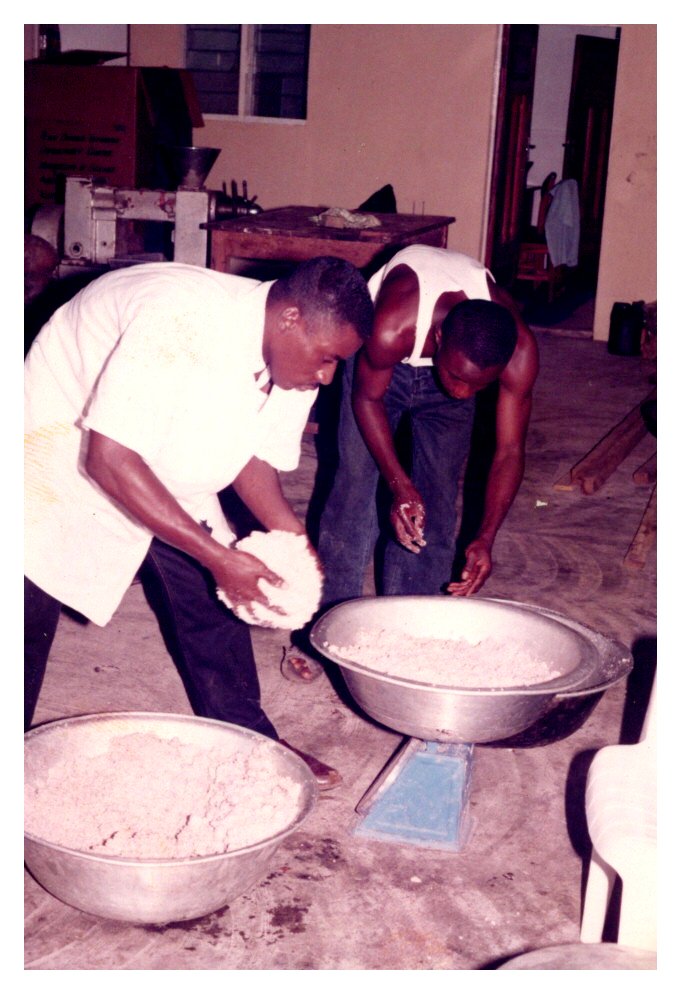
Setting the Stage for Experiments
To address these challenges, the TCC Food Processing Unit designed a series of hands-on experiments using the aqueous (water-based) extraction method. The main objectives of the study were:
- Identify problems in the traditional aqueous process
- Develop processes or technologies to remove bottlenecks
- Determine optimum conditions for key operations, including creaming temperature, creaming time, and water-to-mash ratio for efficient milk extraction
Through twelve carefully designed experimental trials, the team achieved an average extraction efficiency of 50%. While this was slightly lower than the 66% efficiency observed in field trials and 82% from traditional fry-drying methods, the experiments provided a solid foundation for further innovation.
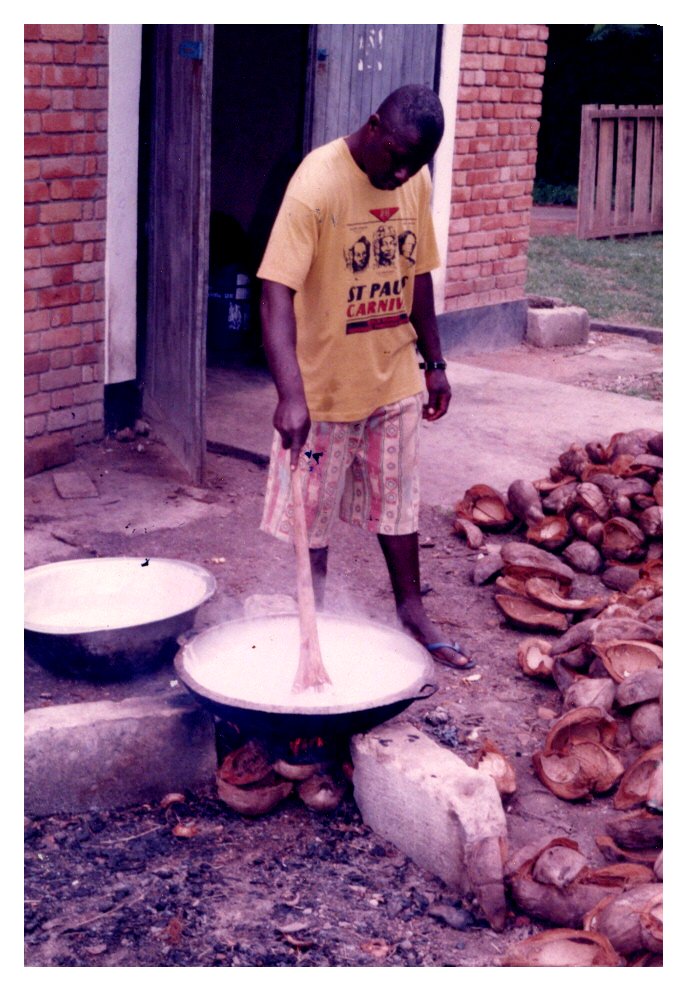
The Process: From Coconut to Oil
The experiments involved a step-by-step processing workflow, each stage documented in photos that highlight TCC-CIMET’s innovative approach:
- Splitting and Kernel Separation
Fresh coconuts were cracked open, and the kernels carefully separated from the shells. - Grating and Milling
The kernels were grated into a coarse mash, then milled into a fine mash to prepare for milk extraction. - Washing and Dewatering
The fine mash was washed to remove impurities and dewatered to prepare it for cream separation. - Cream Extraction and Skimming
Coconut milk was separated from the slurry, and cream was skimmed off. Experiments tested different creaming temperatures and times to optimize efficiency. - Boiling and Oil Clarification
The cream was gently boiled to produce clear coconut oil. Solids and sediments were removed to ensure quality. - Processing Residues
Remaining solids were converted into value-added products like coconut flour or animal feed, reducing waste.
Was this article helpful?
TCC-CIMET
AdminStay up to date with what's happening at TCC-CIMET and within the KNUST community
Related post:
- VISTA, TCC-CIMET and KNUST Join Forces with MIT D-Lab to Transform Aquatic Weeds into Opportunities for Communities
- TCC-CIMET, Engineering Council, Ghana, Russian Mining Engineers Association Advance Framework for Professional Certification of Mining Engineers in Africa
- TCC-CIMET Calls for Harmonized Certification and Professional Recognition of Mining Engineers in Africa
- TCC-CIMET, DAAD explore digital pathways for circular construction in Africa
- TCC-CIMET, AESD Explore Collaboration to Strengthen Agricultural Technology Development in Ghana
- Prof. Agyare Assumes Chairmanship of TCC-CIMET Governing Board, Strengthening UNESCO, Ghana, KNUST Partnership
- Prof. Agyare Pledges to Transform TCC-CIMET and Strengthen Technology Transfer
- Precision Starts with Advanced CNC Machining
- TCC-CIMET Delivers Precision-Engineered Shaft for Legendary Foods' Coconut Shredder
- TCC-CIMET Hosts Japanese Scholars to Explore Collaboration on Technology Management and Skills Development for Artisans