TCC-CIMET Hosts German University Presidents to Strengthen Strategic Partnerships

The TCC International Centre for Innovation, Manufacturing, Technology Transfer and Entrepreneurship (TCC-CIMET) recently hosted six German university presidents in a move to deepen international collaboration and foster strategic partnerships. The visit, facilitated by the International Programs Office (IPO) at KNUST and DAAD, provided a platform for high-level discussions on research collaboration, student and staff exchanges, and joint initiatives aimed at advancing sustainable industrial development and entrepreneurship.
Speaking at the meeting, Director General of TCC-CIMET, Prof. Francis Davis, highlighted the Centre’s core activities.
“TCC-CIMET, a UNESCO Category II Centre of Excellence established in partnership with the Government of Ghana and UNESCO, focuses on translating research into practical, industry-driven solutions. Our initiatives include the flagship Innovation Challenge, which engages engineering student associations across the sub-region to tackle real-world problems. We are also advancing sustainable construction through projects such as BUCABUMA, exploring the use of natural and circular building materials,” he said.
He added that the Centre is expanding efforts in the automotive sector, particularly in electric vehicle adoption and the recycling of end-of-life vehicles, while contributing to regional development through initiatives such as the Trans-Sahara project, which promotes cross-border collaboration and sustainable infrastructure.
Deliberations centered on sustainability and circular building, as well as smart manufacturing and digital transformation.
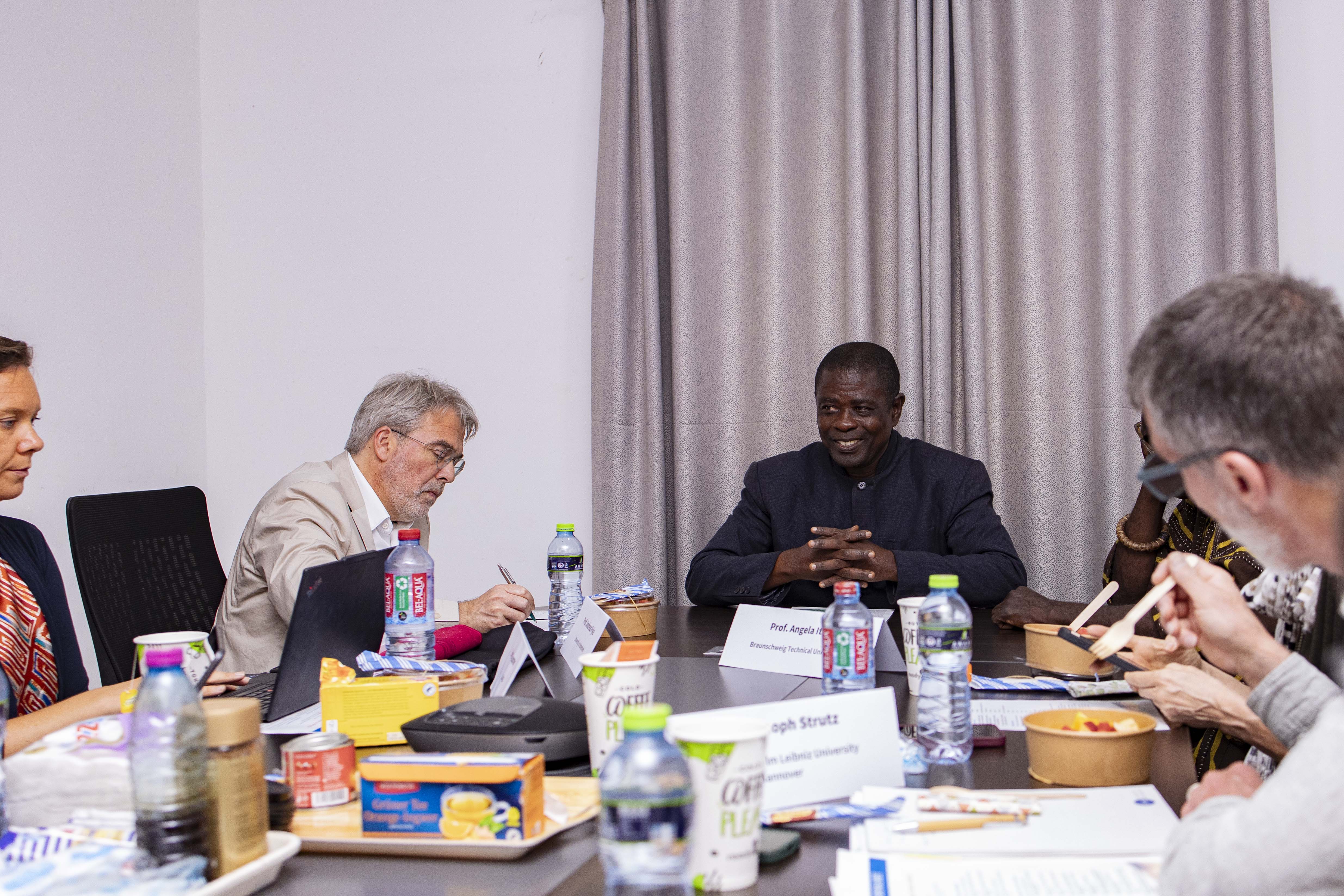
Director of Business Development and Sustainability at TCC-CIMET and Principal Investigator of BUCABUMA, Prof. Alexander Marful, elaborated on the Centre’s sustainable building efforts.
“The building sector contributes significantly to global CO₂ emissions, making it crucial to rethink design and construction. At BUCABUMA, we are developing new building materials, alternative cement formulations, and innovative methods that enable circular use of structural components. This reduces waste, improves efficiency, and fosters economic growth in the sector.”
Prof. Marful emphasized that the project also serves as a capacity-building platform for engineers, architects, and construction professionals, equipping them to implement green and circular practices. He noted that BUCABUMA aligns with TCC-CIMET’s mission to translate research into scalable solutions benefiting communities, industry, and the environment.
The discussions further highlighted opportunities in e-mobility, community-based smart cities, and capacity building, emphasizing innovation challenges, mobility programs, and strategic partnerships with pilot centres to deliver impactful solutions for both industry and society.
Prof. Angela Ittel, President of Technische Universität Braunschweig, expressed interest in the Centre’s electric vehicle training, workshops, and research hub, highlighting its potential as a dynamic platform for hands-on learning and international collaboration.
“For more than a decade, we have been developing a campus adjacent to Volkswagen, now evolving into an independent, collaborative hub for innovation. Building on our long-standing work in circular economy and advanced materials, we are launching hands-on ‘Explorer Masters’ programmes where students learn through real-world research rather than traditional lectures. This model, combined with international training workshops for both researchers and industry professionals, represents a transformative approach to engineering education one that strongly supports the development of globally connected electric vehicle training and research hubs,” she said.
President of the University of Kassel, Prof. Dr. Ute Clement, also expressed interest in some areas that the centre operates in.
“I would be interested to talk about what we can do together in sustainability, urban research, architecture, and green materials. We aim to work closely with communities, reusing structural components and integrating local knowledge, while connecting this with hands-on student training, electric vehicle research, and smart manufacturing. This collaboration can really bridge research, practice, and international exchange,” she said.
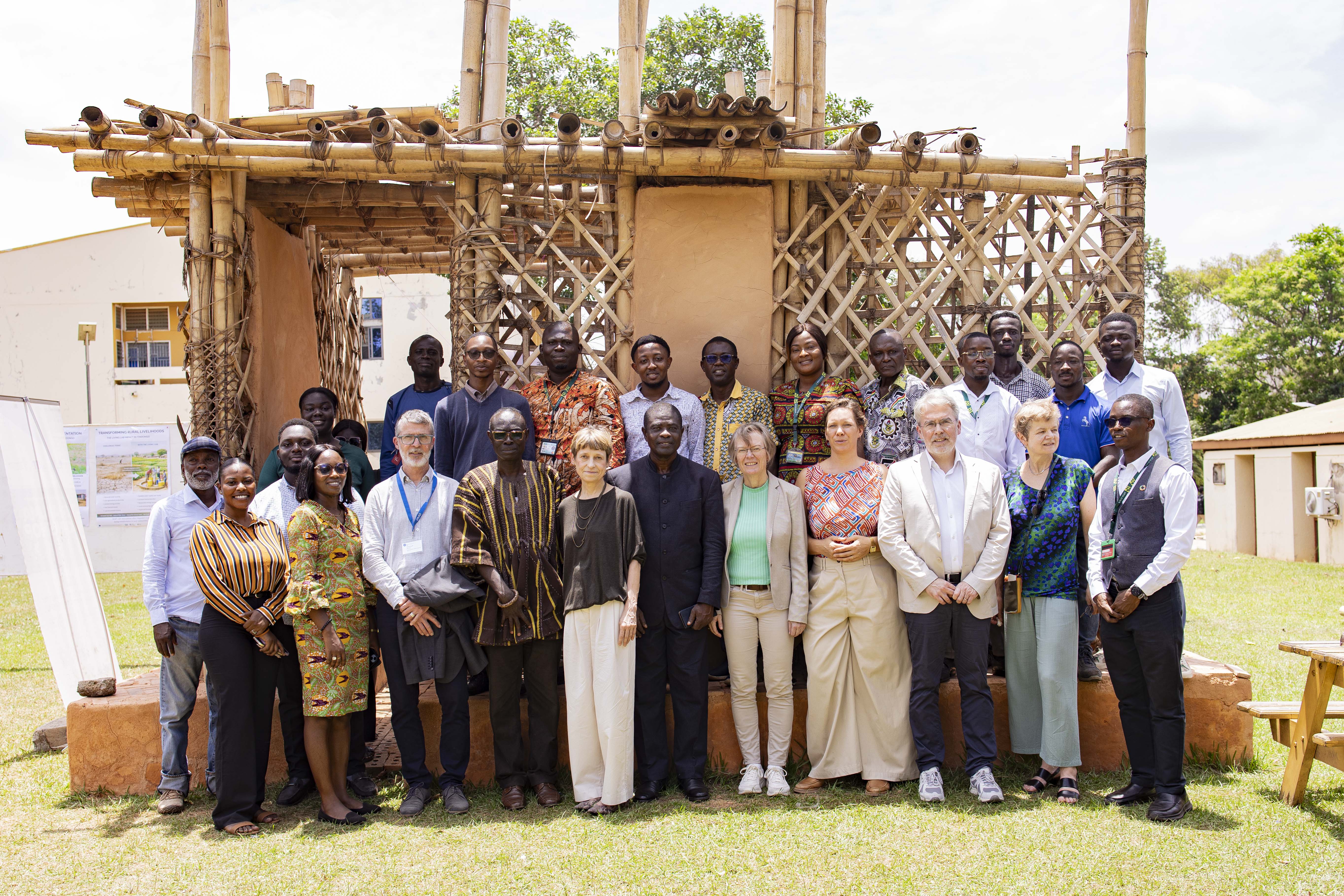
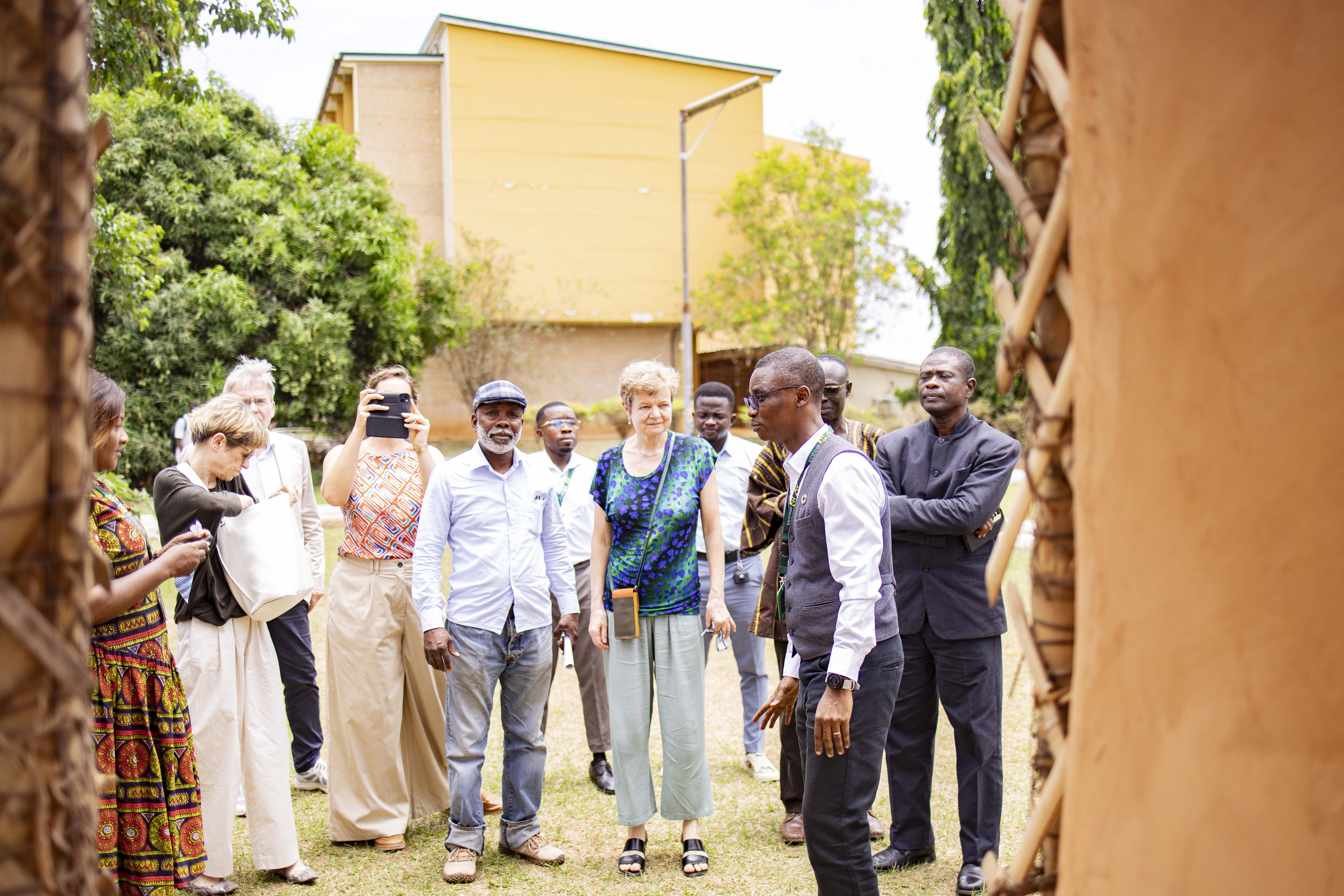
The delegation visited the pilot building, which serves as the testing site for the BUCABUMA project.
Was this article helpful?
TCC-CIMET
AdminStay up to date with what's happening at TCC-CIMET and within the KNUST community
Related post:
- TCC-CIMET, DAAD explore digital pathways for circular construction in Africa
- TCC-CIMET, AESD Explore Collaboration to Strengthen Agricultural Technology Development in Ghana
- Prof. Agyare Assumes Chairmanship of TCC-CIMET Governing Board, Strengthening UNESCO, Ghana, KNUST Partnership
- Prof. Agyare Pledges to Transform TCC-CIMET and Strengthen Technology Transfer
- Precision Starts with Advanced CNC Machining
- TCC-CIMET Delivers Precision-Engineered Shaft for Legendary Foods' Coconut Shredder
- TCC-CIMET Hosts Japanese Scholars to Explore Collaboration on Technology Management and Skills Development for Artisans
- TCC-CIMET and Whitefalls Energy Explore Clean Energy Transportation Initiative for KNUST
- WiNE-KNUST, TCC-CIMET Celebrates International Women in Engineering Day with an Inspiring Seminar
- TCC-CIMET Hosts the African WEFE Nexus Summit 2026 Under the Trans Sahara Project