TCC-CIMET secures EU Grant for BUCABUMA Project to advance Circular Natural Building Materials with Frugal Tech
The TCC International Centre for Innovation, Manufacturing, Technology Transfer and Entrepreneurship (TCC-CIMET) at the Kwame Nkrumah University of Science and Technology (KNUST) has been awarded a major grant from the European Education and Culture Executive Agency (EACEA) to advance its Building Capacity in Circular Natural Materials using Frugal Digital and Traditional Engineering Innovations (BUCABUMA) Project. The grant, issued under powers delegated by the European Commission, aims to accelerate research and capacity building in climate-resilient construction across Africa.
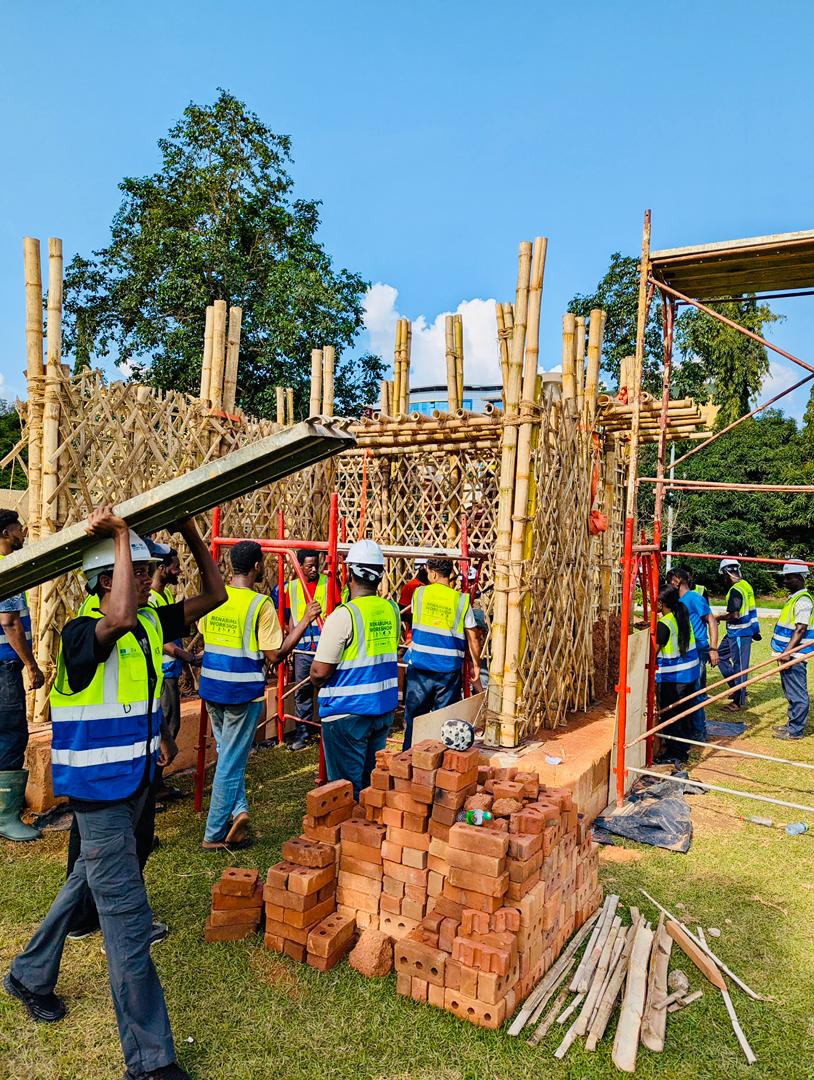
The BUCABUMA Project seeks to develop the capacity of individuals in the building industry by blending traditional construction knowledge with modern digital technologies. Using locally available renewable materials such as clay, bamboo, wood and natural fibres, the initiative will develop affordable, environmentally friendly building solutions. Digital design and frugal engineering tools will be used to reinterpret traditional techniques, creating new pathways for sustainable construction.
The project also responds to urgent environmental concerns by promoting circular economy practices that reduce resource depletion and lower carbon emissions. By integrating advanced digital fabrication with indigenous building traditions, BUCABUMA aims to enhance material efficiency and support climate adaptation efforts.
Led by Principal Investigator Prof. Alexander Marful, the initiative will involve students from KNUST’s Colleges of Engineering, Art and Built Environment, and Science. Participants will engage in an Intra-Africa Mobility Program spanning partner institutions in Ghana, Ethiopia, Kenya and South Africa.
The consortium brings together five leading institutions:
- TCC-CIMET, KNUST (Ghana)
- University of Nairobi (Kenya)
- Ethiopian Institute of Architecture, Building Construction and City Development – AAU (Ethiopia)
- University of the Witwatersrand (South Africa)
- Karlsruhe Institute of Technology – KIT (Germany)
Director General of TCC-CIMET, Prof. Francis Davis, described the project as timely, noting that it strengthens the mandate of the UNESCO Category 2 Centre of Excellence for Africa hosted at KNUST.
Through large-scale promotion of natural materials, the development of climate-resilient housing models, and research into biological and technical circular economy cycles, the BUCABUMA initiative aims to catalyze a shift toward greener, more adaptive construction practices. The project also explores the use of renewable plant resources, agricultural by-products and repurposed plastics from landfills.
By centering hyperlocal materials and community-driven solutions, BUCABUMA marks a significant step toward a more sustainable, affordable and climate-conscious built environment for Africa.
Was this article helpful?
TCC-CIMET
AdminStay up to date with what's happening at TCC-CIMET and within the KNUST community
Related post:
- TCC-CIMET, DAAD explore digital pathways for circular construction in Africa
- TCC-CIMET, AESD Explore Collaboration to Strengthen Agricultural Technology Development in Ghana
- Prof. Agyare Assumes Chairmanship of TCC-CIMET Governing Board, Strengthening UNESCO, Ghana, KNUST Partnership
- Prof. Agyare Pledges to Transform TCC-CIMET and Strengthen Technology Transfer
- Precision Starts with Advanced CNC Machining
- TCC-CIMET Delivers Precision-Engineered Shaft for Legendary Foods' Coconut Shredder
- TCC-CIMET Hosts Japanese Scholars to Explore Collaboration on Technology Management and Skills Development for Artisans
- TCC-CIMET and Whitefalls Energy Explore Clean Energy Transportation Initiative for KNUST
- WiNE-KNUST, TCC-CIMET Celebrates International Women in Engineering Day with an Inspiring Seminar
- TCC-CIMET Hosts the African WEFE Nexus Summit 2026 Under the Trans Sahara Project