TCC-CIMET, AESD Explore Collaboration to Strengthen Agricultural Technology Development in Ghana
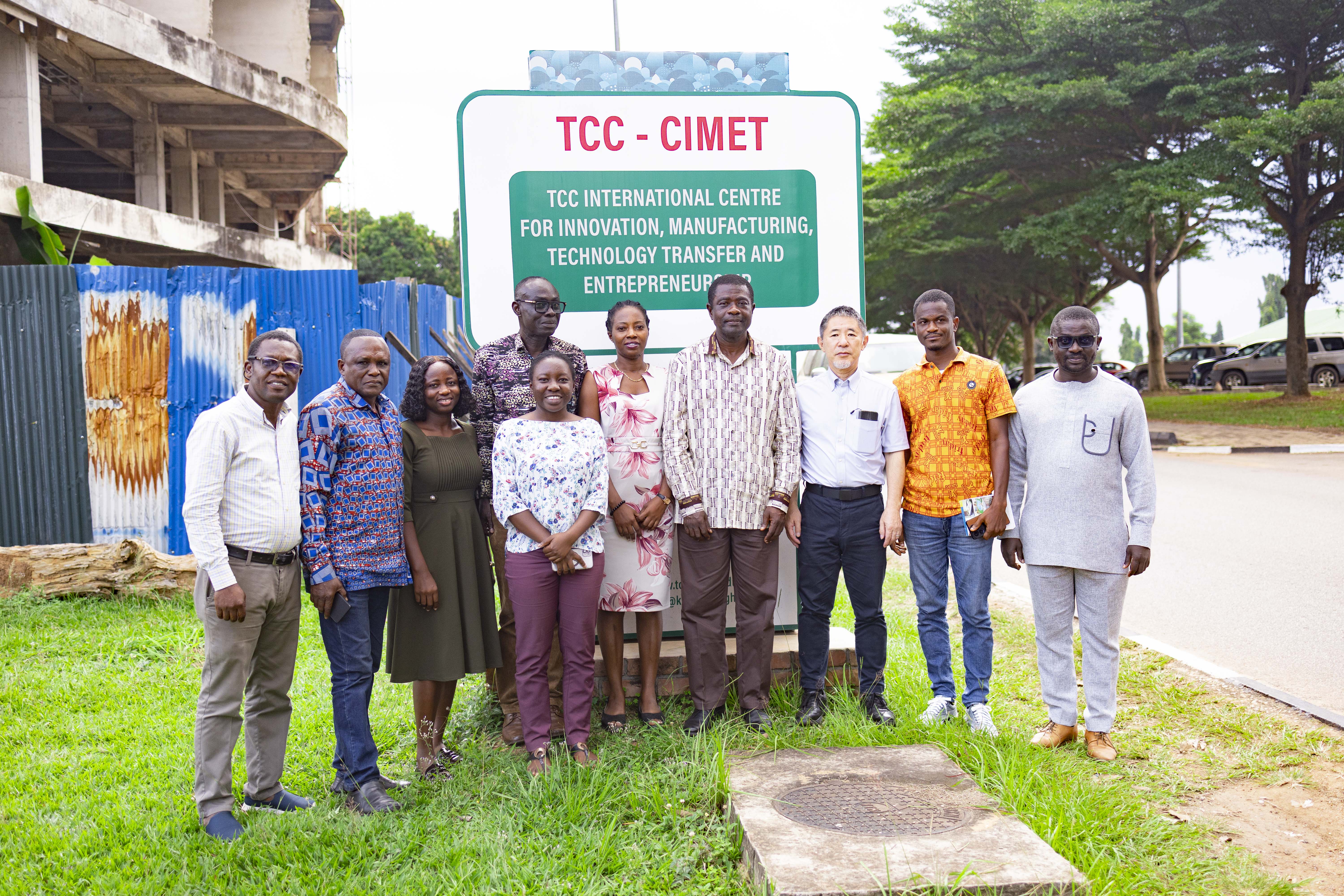
The Technology Consultancy Centre International Centre for Innovation, Manufacturing, Technology Transfer and Entrepreneurship (TCC-CIMET) at the Kwame Nkrumah University of Science and Technology (KNUST) has held discussions with the Agricultural Engineering Service Directorate (AESD) on strengthening Ghana’s capacity to develop, adapt, manufacture, test and deploy agricultural technologies suited to local farming conditions.
The discussions, which took place at TCC-CIMET, focused on the challenges confronting local agricultural machinery fabricators, the strengthening of adaptive research and technology testing, and opportunities for collaboration among research institutions, government, industry, international technology providers and agricultural technology users.
The AESD delegation was led by OISHI Tsueno, who was welcomed to TCC-CIMET by its Director-General, Professor Francis Davis.
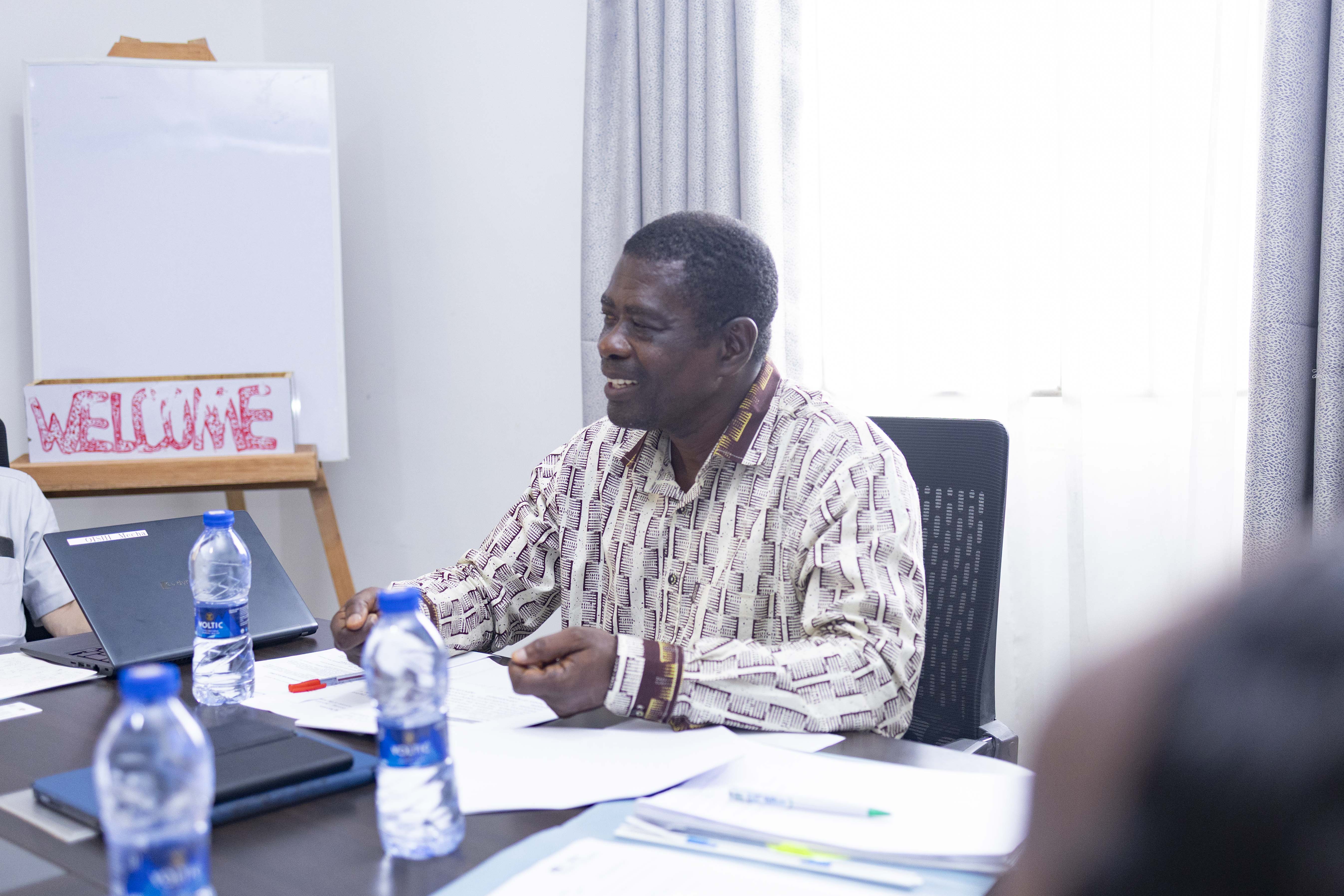
In welcoming the delegation, Prof. Davis underscored the importance of building stronger connections between research, engineering, manufacturing and the practical needs of agriculture.
“If Ghana is to build a stronger agricultural technology sector, we must strengthen the systems that connect ideas and research to actual production and use. Local fabricators, researchers, engineers, government institutions and technology providers all have an important role to play in ensuring that technologies developed or introduced into Ghana are appropriate, affordable, maintainable and capable of responding to the realities of our farmers.”
The meeting examined the position of local agricultural machinery fabricators within Ghana’s agricultural technology ecosystem and identified a number of constraints affecting their ability to develop and manufacture machinery at the required scale and quality.
Among the key challenges identified were poor access to quality raw materials, inadequate production equipment, limited engineering and design capabilities, and limited access to finance, among others.
These challenges were considered to have implications for the wider agricultural mechanization agenda, as weaknesses in local fabrication capacity can limit the country’s ability to adapt imported technologies, develop locally appropriate machinery and provide timely maintenance and technical support to farmers.
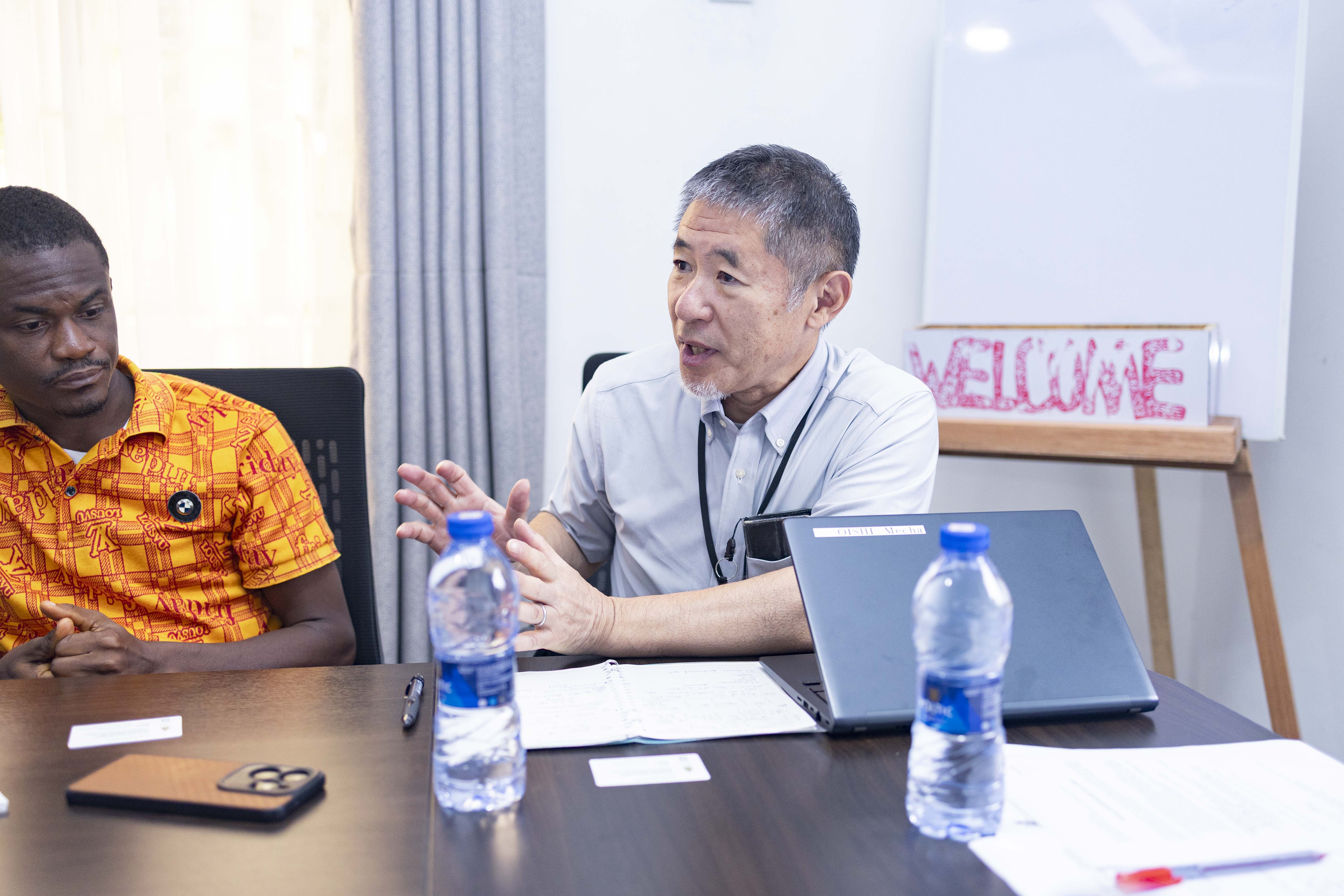
OISHI Tsueno noted the importance of creating practical mechanisms through which local technical capacity could be strengthened and agricultural technologies could be tested and improved under real operating conditions.
“The development of agricultural machinery should not end with the production of a machine. We need systems that allow technologies to be tested, evaluated and improved in actual agricultural environments, while also giving engineers and fabricators the opportunity to learn from farmers and respond to their needs.”
Proposed fabrication hubs and machinery testing programme
As part of efforts to address the challenges identified, participants discussed the possible establishment of agricultural machinery fabrication hubs to provide local fabricators with improved access to production equipment, technical resources and engineering support.
The proposed hubs could also create opportunities for collaboration among fabricators, engineers, researchers and technology developers, helping to strengthen local capacity for prototyping, equipment development and manufacturing.
The meeting also considered the development of a rice machinery testing and certification programme.
Participants noted that strengthening testing and certification could provide manufacturers with clearer technical standards while generating reliable information on the performance, safety, durability and suitability of agricultural machinery before such equipment is promoted for wider use.
Such a system could also contribute to greater confidence among farmers, institutions and potential buyers of locally manufactured agricultural machinery.
Strengthening adaptive research at Somanya
A significant part of the discussions centred on the proposed strengthening of adaptive research at the Somanya Adaptive Trial Station (ATS).
The collaboration could provide a practical environment for agricultural technologies to be tested, demonstrated and adapted to local farming conditions before wider deployment.
Rather than treating research, manufacturing and agricultural use as separate activities, the proposed approach seeks to create stronger linkages between technology developers, researchers, local fabricators and end users.
The meeting also discussed opportunities to use agricultural demonstration equipment, including moisture meters from Japanese private companies, to support practical demonstrations and technology application.
Potential AFICAT showroom at KNUST
The participants further explored the possibility of establishing an AFICAT (Africa Field Innovation Centre for Agricultural Technology) showroom at KNUST.
The proposed showroom could serve not simply as a space for displaying agricultural machinery, but as a platform for technology demonstration, knowledge exchange and stakeholder engagement.
It could provide opportunities for farmers, researchers, engineers, fabricators, businesses and technology providers to interact with agricultural technologies, assess their suitability and identify opportunities for local adaptation, improvement or manufacturing.
For TCC-CIMET, such initiatives are closely aligned with its mandate to promote innovation, technology development, technology transfer, local manufacturing and entrepreneurship.
Prof. Davis emphasized that strengthening Ghana’s agricultural technology ecosystem requires a shift from viewing technology as a finished product to recognising it as a process that involves continuous adaptation, testing and improvement.
“The question is not simply whether a technology exists. The more important question is whether it works within our conditions, whether it can be maintained, whether our local industries can participate in its development, and whether it ultimately creates value for the people who use it. That is where meaningful technology transfer begins.”
Towards stronger institutional partnerships
The meeting concluded with a commitment to translate the discussions into more structured institutional collaboration.
The participants agreed to work towards the development of Memoranda of Understanding (MoUs) to formalise areas of cooperation involving KNUST and JICA; KNUST and the Somanya Adaptive Trial Station; and AESD, through the Ministry of Food and Agriculture, and relevant partners.
The proposed partnerships are expected to provide a framework for collaboration in areas including adaptive research, agricultural machinery development, testing and demonstration, local fabrication, technology transfer and capacity development.
Was this article helpful?
TCC-CIMET
AdminStay up to date with what's happening at TCC-CIMET and within the KNUST community
Related post:
- VISTA, TCC-CIMET and KNUST Join Forces with MIT D-Lab to Transform Aquatic Weeds into Opportunities for Communities
- TCC-CIMET, Engineering Council, Ghana, Russian Mining Engineers Association Advance Framework for Professional Certification of Mining Engineers in Africa
- TCC-CIMET Calls for Harmonized Certification and Professional Recognition of Mining Engineers in Africa
- TCC-CIMET, DAAD explore digital pathways for circular construction in Africa
- Prof. Agyare Assumes Chairmanship of TCC-CIMET Governing Board, Strengthening UNESCO, Ghana, KNUST Partnership
- Prof. Agyare Pledges to Transform TCC-CIMET and Strengthen Technology Transfer
- Precision Starts with Advanced CNC Machining
- TCC-CIMET Delivers Precision-Engineered Shaft for Legendary Foods' Coconut Shredder
- TCC-CIMET Hosts Japanese Scholars to Explore Collaboration on Technology Management and Skills Development for Artisans
- TCC-CIMET and Whitefalls Energy Explore Clean Energy Transportation Initiative for KNUST